- +52 663 215 6973
- contacto@rilassareclinic.com
- Diego Rivera 2311, Tijuana
- Mon - Sat 10:00 - 18:00

 ES
ES
This content is for informational and educational purposes only. It is not a diagnosis and does not replace consultation with a healthcare professional. If you have hypertension or associated risk factors, consult a doctor for diagnosis and follow-up.
Does Rilassáre's complementary medicine replace traditional medicine?
No. Our complementary medicine protocols (nutrition, psychological support, and general medicine) are designed as an adjunct to the treatment a patient may already be receiving, never as a substitute. Every case is individually assessed by our medical team, since no intervention is free of risk and its suitability depends on each person's clinical history.
What is hypertension?
A condition in which the force of the blood against the artery walls is too high. Generally, hypertension is defined as blood pressure above 140/90 and is considered severe when it is above 180/120.
Symptoms of hypertension may include:
Medical diagnosis is required.
In some cases, high blood pressure shows no symptoms. If left untreated, it can lead to health issues over time, such as heart disease and strokes.
Causes of hypertension
- • Frequently eating unhealthy foods.
- • Drinking too much alcohol or caffeine.
- • Not getting enough physical activity.
- • Smoking or using illegal drugs.
- • Not getting enough quality sleep.
- • Hereditary factors.
Types of hypertension
- • Primary or essential. This is the most common type of high blood pressure. It usually develops over time as you age.
- • Secondary. Caused by another medical condition or the use of certain medications.
Hypertension diagnosis
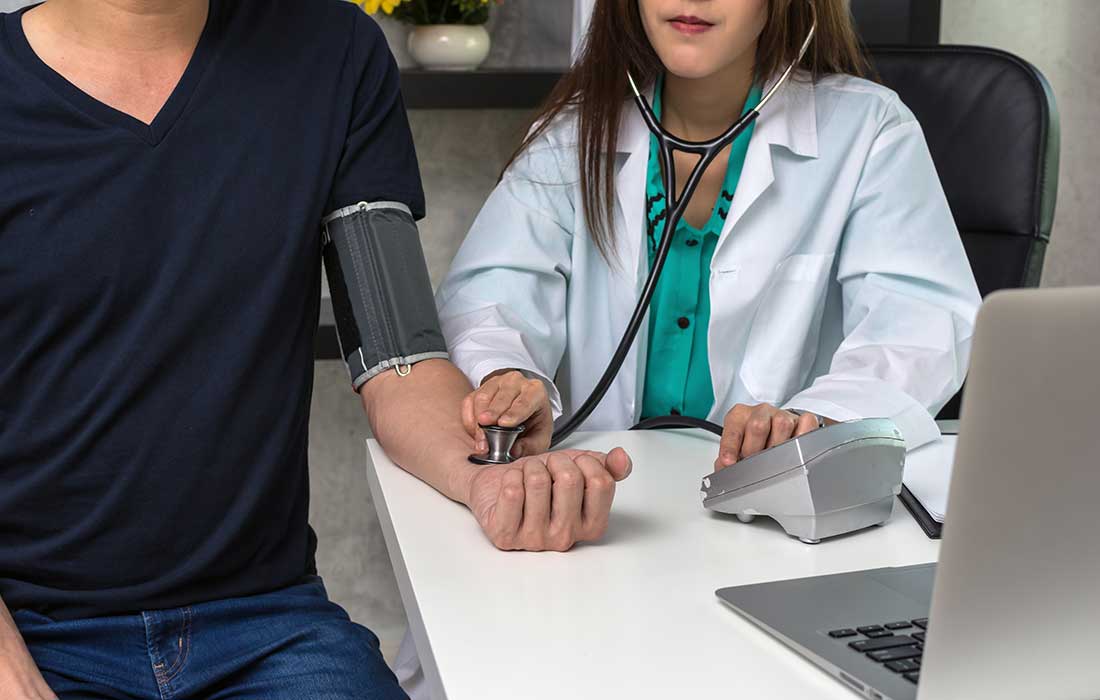
High blood pressure (hypertension) is diagnosed if a blood pressure reading is 130/80 mm Hg or higher. A diagnosis is based on the average of two or more readings taken on different occasions, and must always be confirmed by a doctor.
Hypertension treatments
- • Treatment must be determined by a doctor and may include self-care and, in some cases, diuretics or other medications.
- • Following a healthy diet with less salt, exercising regularly, and taking prescribed medications can help control blood pressure.
- • Self-care: physical exercise, stress control, quitting smoking, home blood pressure monitoring, and a low-sodium diet.
- • Medications (always under medical prescription): ACE inhibitor, diuretic, beta-blocker, antihypertensive, calcium channel blocker, and vasodilator.
Complications of hypertension
Uncontrolled hypertension can cause the blockage or rupture of arteries that supply blood and oxygen to the brain, which can result in a stroke. It can also cause kidney damage that leads to kidney failure.
Prevention of hypertension
- • Reduce salt intake (to less than 5g per day).
- • Eat more fruits and vegetables.
- • Engage in regular physical activity.
- • Avoid tobacco use.
- • Reduce alcohol consumption.
- • Limit foods high in saturated fats.
- • Eliminate or reduce trans fats in your diet.
Online doctor
If you would like an online medical consultation, click the button below to visit our website www.virtualmedical.com.mx
Visit SiteFrequently Asked Questions
We answer your main questions about high blood pressure.
What is hypertension?
It is a condition in which the force of blood against the artery walls is too high, generally above 140/90, and it requires medical diagnosis and follow-up.
Can hypertension be cured?
Primary hypertension is generally controlled, not cured; it requires ongoing management with lifestyle changes and, in many cases, medications prescribed by a doctor.
When should I see a doctor about hypertension?
You should see a doctor if your blood pressure readings are consistently 130/80 mm Hg or higher, or immediately if you experience chest pain, shortness of breath, or blurred vision.